

Sunday Sauce &
the Recipes We Carry With Us
Some of my strongest childhood memories begin in the kitchen.
I grew up standing beside my mother and my Nonna, watching, listening and trying to absorb everything they were doing. Like so many Italian families, Sunday dinner was a constant in our house. And long before we sat down at the table, you could smell Sunday happening.
The sauce simmering on the stove. The meatballs frying. The sounds of pots and pans and conversations happening around the kitchen.
Even now, all these years later, those smells can take me right back there.
Suddenly, I'm that little girl again, standing close by, watching their hands and yearning to learn all the secrets.
The funny thing is, there wasn't always a recipe.
A little of this. A handful of that. You knew by how it felt. You knew by how it looked. You tasted it and somehow, you just knew.
I'm an excellent cook today, and I know that much of what I learned came from those years in the kitchen. But I also believe cooking comes from somewhere deeper.
Anyone can follow a good recipe and make delicious food. Recipes matter. Ingredients matter. Technique matters.
But letting your heart guide your cooking? That's something else entirely.
It's knowing when the sauce needs another few minutes without looking at a clock. It's adding a little more cheese because it feels right. It's making enough food for six people when only four are coming because someone might stop by - and because no one should ever leave your table hungry.
It's cooking by instinct, but also by memory.
And perhaps that's what my mother and Nonna were really teaching me all those years ago. They weren't simply teaching me how to make sauce or meatballs. They were teaching me how to feed people.
The Recipes We Inherit
There are recipes we write down, carefully measuring every ingredient and recording every step.
And then there are the recipes we carry with us.
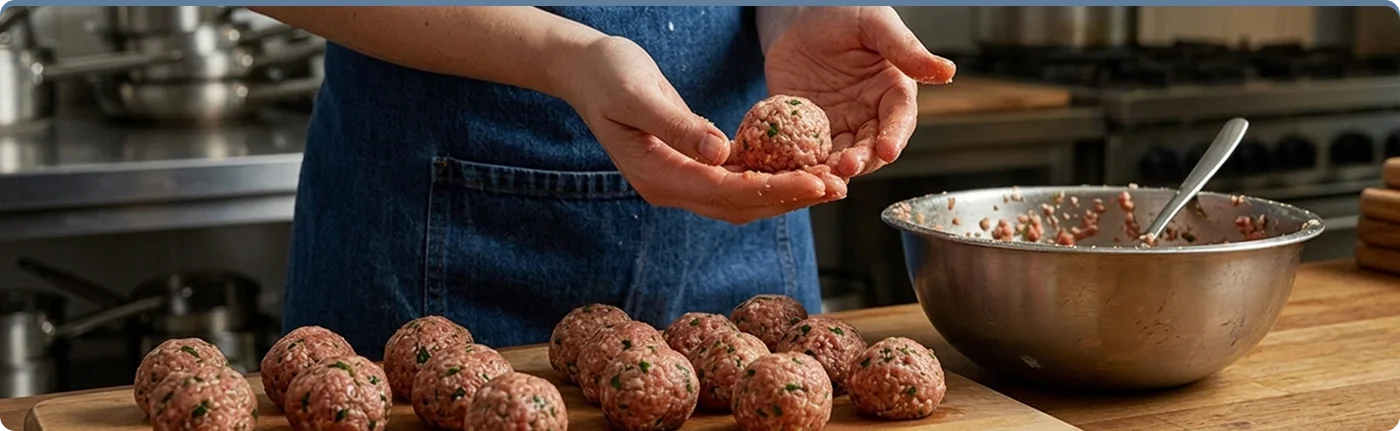
They're stored somewhere between memory and instinct. We remember the wooden spoon someone always used. The pan that came out every Sunday. The way a mother rolled a meatball between her palms or the way a grandmother knew the dough was ready simply by touching it.
Over the years, we try to recreate those dishes. And sometimes we get very close.
But somehow, it never tastes exactly the same.
I've come to believe that's because we're trying to recreate more than food.
We're trying to recreate a moment
Sunday Was About More Than Sauce
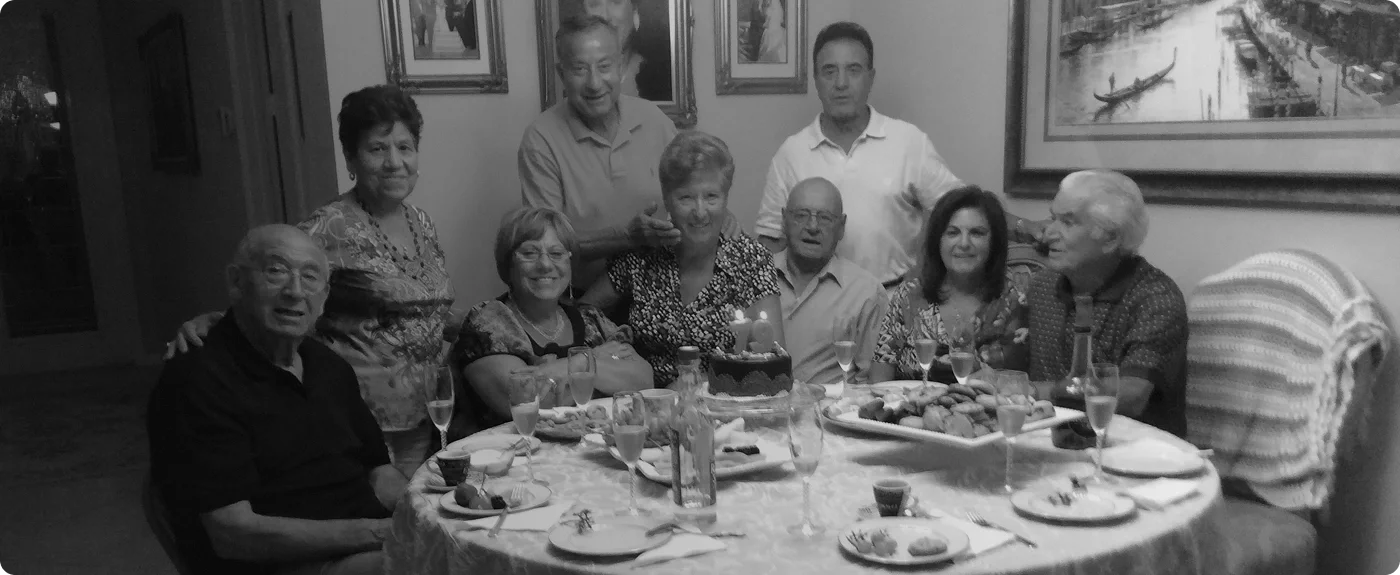
Sunday dinner was a ritual.
It was family around a table. It was talking and laughing and probably arguing a little - because what Italian family doesn't?
It was passing bowls, reaching across one another and telling someone to eat more even though they'd already had seconds.
Food was the reason we gathered, but being together was the point.
And that is something I've carried into my own life.
I love to cook. I love a beautiful table. I love making something special and watching people enjoy it. But what I really love is what happens around the food.
Friends stay longer. Family tells stories. Someone remembers something that happened twenty years ago.
People laugh.
And for a few hours, everyone is together.
The Great Meatball Debate
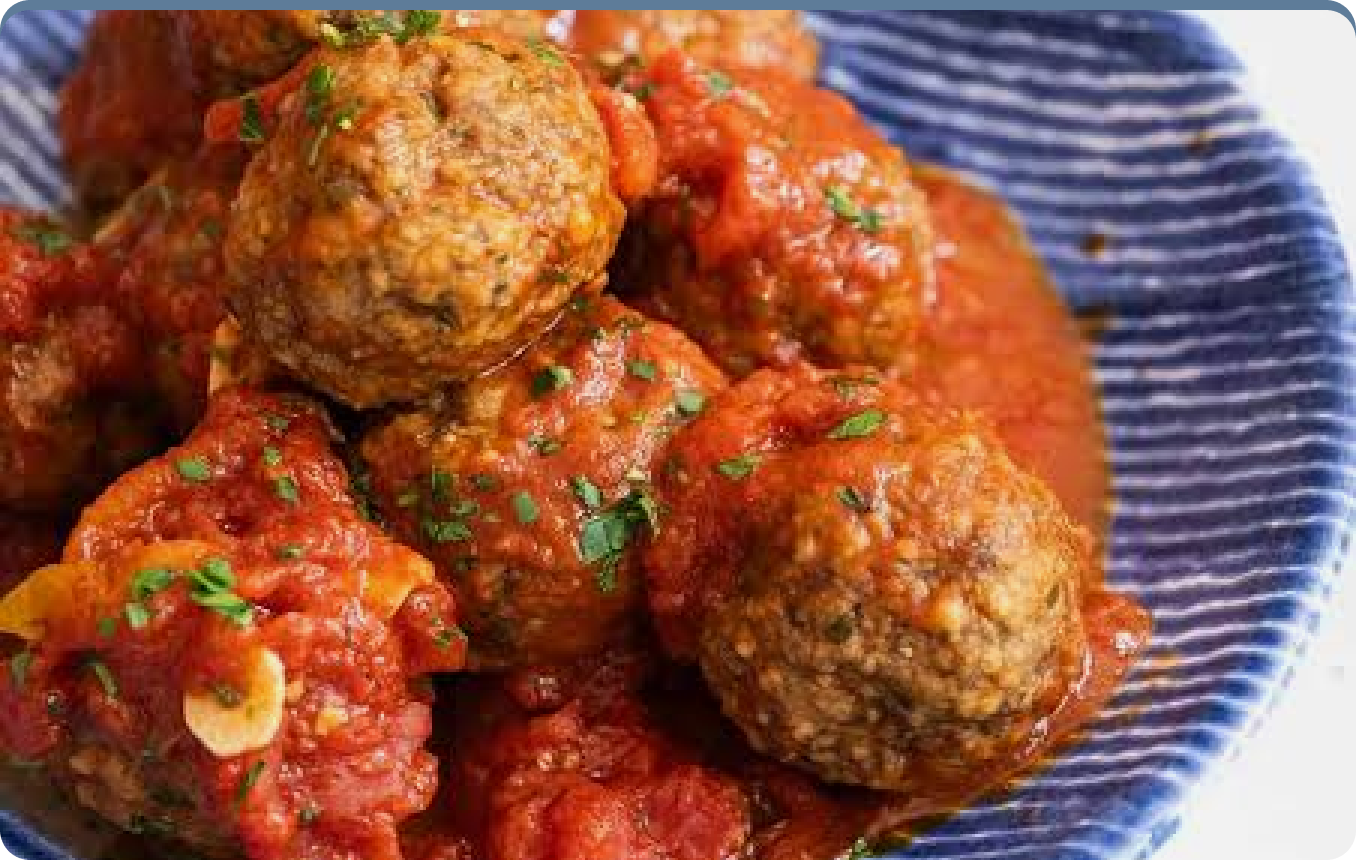
And then there are my mother's meatballs.
My husband and my children adored their Nonna's meatballs. And to this day, almost every time I make mine, the discussion begins.
Are they like Nonna's? Are they as soft as hers? Did Nonna put something different in them? Are these better? Worse? Close - but not quite?
Apparently, no meatball I make can simply be a meatball. It must first be compared to Nonna's.
And truthfully, I love it.
Because what they're really remembering isn't only the taste of her meatballs. They're remembering her.I can use the same ingredients. I can make them the way I remember watching her make them. I can get them very, very close.
But perhaps they'll never taste exactly like Nonna's to my husband and children. And maybe they're not supposed to.
Because food and memory become so intertwined that sometimes we're not really comparing one meatball to another. We're comparing the way something tastes today to the way it felt when someone we loved made it for us.
That's an impossible recipe to duplicate.
Food Is How We Remember
The older I get, the more I understand why those Sundays meant so much.
Food has an extraordinary ability to connect us - to our families, our heritage, our friends and even earlier versions of ourselves.
One smell can bring back an entire room. One bite can make you remember someone you haven't thought about in years.
And one recipe can travel through generations, changing a little with each pair of hands that makes it while somehow remaining part of the same story.
I still love learning in the kitchen. I still experiment. I still change things and cook by instinct.
And sometimes, when the sauce is simmering and the smell of meatballs frying fills my kitchen, I'm not thinking about technique at all.
I'm back beside my mother and my Nonna. Still watching. Still learning. Still that little girl trying to discover all their secrets.
And maybe I finally understand the biggest one.
The secret was never just what they put in the food.
It was what they put into feeding the people they loved.
From My Kitchen
My Version of Nonna's Meatballs
There are countless ways to make an Italian meatball, but this is the way I learned from my mother. The secret isn't one special ingredient. It's the little choices, the memories and, most importantly, how gently you handle the meat.
Ingredients
• 1 pound ground beef
• 1/2 pound ground pork
• 3 cups crustless day-old bread, cut into approximately 1-inch cubes
• 3 large eggs
• 3 cloves garlic, very finely minced
• 1/4 cup fresh parsley, finely minced
• 1/2 cup grated Pecorino Romano, plus a little more if your heart tells you to
• Pine nuts, optional
• Raisins, optional; soaked in water until soft and plump, then well drained
• Salt and freshly ground black pepper, to taste
• Wesson vegetable oil, for frying
The Bread - Water, Never Milk
Many meatball recipes call for soaking the bread in milk. My mother never did.
She soaked hers in water, squeezed it very well and crumbled it into the meat mixture. That's how I learned to make them, and that's how I still make them today.
Could I use milk? Of course.
But then they wouldn't be my mother's meatballs.
Place the bread cubes in a bowl and cover with water. Let them soak until completely softened. Using your hands, squeeze out as much water as possible, then crumble the softened bread very finely.
Pine Nuts & Raisins
My mother also added pine nuts and raisins to her meatballs, giving them little bites of sweetness and texture throughout.
My children never cared for the raisins, so over the years I started leaving them out when I made meatballs for my own family.
But if you're making this recipe, I think you should try them at least once the way my mother made them.
If using raisins, soak them in water first until they are soft and plump, then drain them well before adding them to the meat mixture. Pine nuts are optional as well.
Make the Meatballs
Place the beef and pork in a large bowl.
In a separate bowl, beat the eggs well before adding them to the meat. This is one of those little steps that helps everything come together without having to work the meat too much.
Add the prepared bread, garlic, parsley, Pecorino Romano, salt and pepper. Add the pine nuts and plumped, drained raisins if you're using them.
My mother started mixing everything together with a fork. Then, eventually, she went in with her hands.
Do the same: begin gently with a fork, then use your hands only as much as needed to finish bringing the mixture together.
Do not knead, squeeze or overmix. The more you work the meat, the tougher the meatballs will become.
Use a light touch and stop as soon as everything is incorporated.
Gently form the mixture into meatballs, being careful not to compact them too tightly.
Fry the Meatballs
Pour enough Wesson vegetable oil into a large frying pan to generously coat the bottom and heat over medium heat.
Working in batches so you don't overcrowd the pan, gently fry the meatballs, turning until beautifully browned on the outside. They do not need to cook completely through.
Transfer the browned meatballs to your simmering Sugo Napoletano, where they will finish cooking and flavor the sauce along the way.
A Little Note From My Kitchen
Yes, many meatball recipes use olive oil. My mother always used Wesson vegetable oil. To this day, that familiar smell of meatballs frying brings me right back to her kitchen.
And one last reminder from my mother's kitchen: beat the eggs first, start with a fork, finish gently with your hands, and whatever you do, don't overwork the meat.
Sugo Napoletano
Our Slow-Cooked Sunday Sauce
This is not a quick sauce. Sugo Napoletano is meant to cook slowly - filling the house with that unmistakable Sunday smell while the meats become tender and the tomatoes transform into a rich, deep sauce.
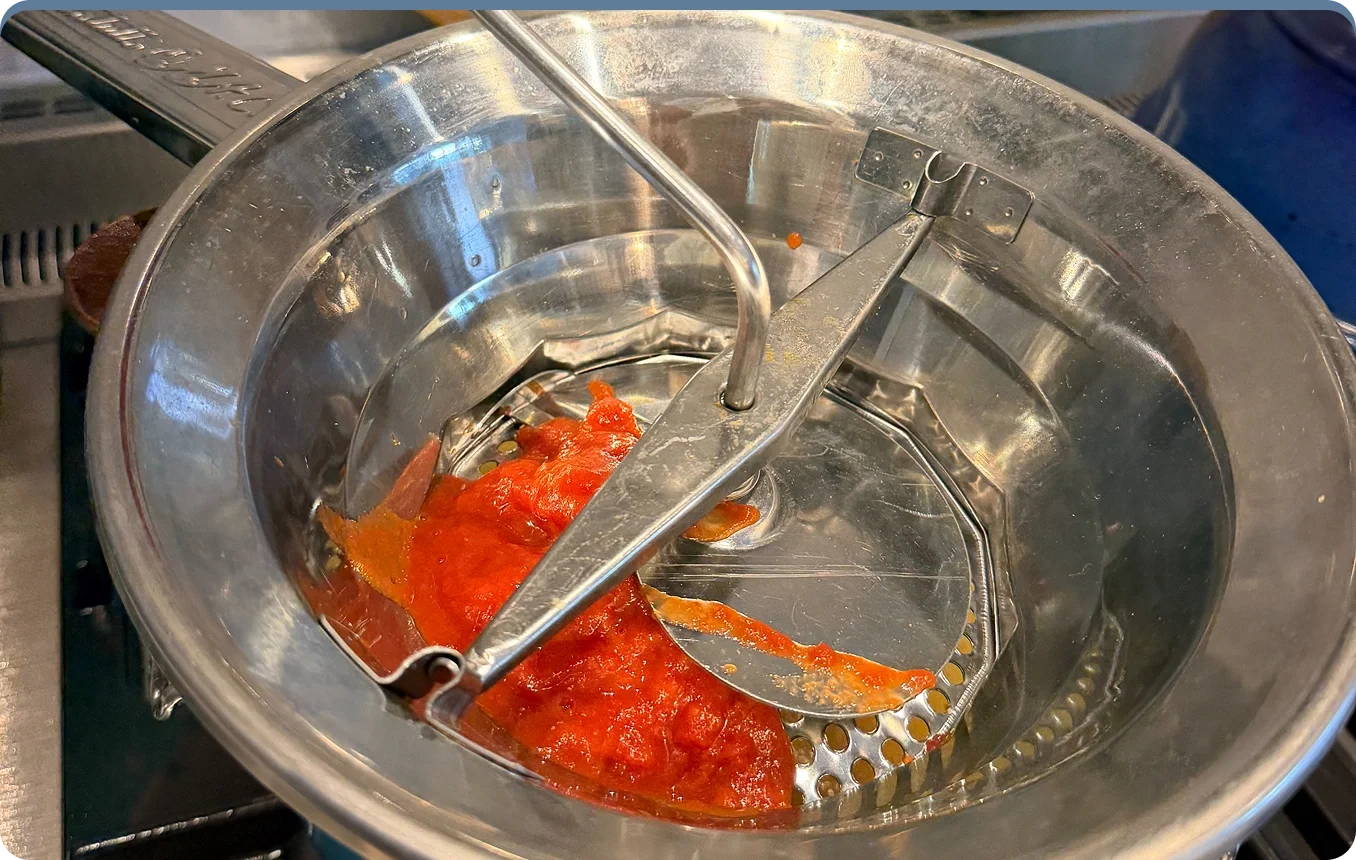
My mother started with whole canned tomatoes, passed them through her food mill, and let time do the rest. Today, I make it the same way. I even use her food mill.
My mother sometimes made Sunday sauce even more elaborate, adding her braciole stuffed with pine nuts, raisins and all sorts of goodness - and even a traditional pork-skin braciole. Those recipes deserve a story all their own.
Ingredients
The Meats
• 1 pound beef chuck
• 1 1/2 pounds pork ribs
• 4 large Italian pork sausages
• 1 batch of My Version of Nonna's Meatballs, prepared according to the recipe
The Sauce
• 3 (28-ounce) cans whole peeled San Marzano tomatoes
• 2 tablespoons tomato paste
• 1 cup dry red wine
• 1 large golden onion, very finely chopped
• 1/4 cup extra-virgin olive oil
• 1 bunch fresh basil, divided
• Kosher salt and freshly cracked black pepper, to taste
• Water, as needed
You'll Also Need
• A large heavy-bottomed pot or Dutch oven
• A food mill, or passatutto
1. Sear the Meats
Heat the olive oil in a large, heavy-bottomed pot or Dutch oven over medium-high heat.
Add the beef chuck, pork ribs and whole sausages. Sear for 10 to 12 minutes, turning frequently, until the meats develop a deep brown crust on all sides.
Remove the meats with tongs and set aside on a platter, leaving the rendered fats and browned bits in the pot.
2. Slowly Cook the Onion
Reduce the heat to medium and add the finely chopped onion to the same pot.
Cook for 8 to 10 minutes, stirring frequently and scraping up the caramelized bits from the bottom. The onion should become soft, translucent and lightly golden, but never burned.
3. Tomato Paste & Red Wine
Add the tomato paste directly to the onion and stir for about 2 minutes, allowing it to deepen to a rich brick-red color.
Pour in the red wine and simmer for about 5 minutes, until the alcohol has cooked away and the wine has reduced into a rich glaze.
4. The Tomatoes - The Way My Mother Did
Return all the seared meats, along with any juices that have collected on the platter, to the pot.
Pass each can of whole San Marzano tomatoes through the food mill directly into the pot.
My mother always filled each empty tomato can with water, swished it around to capture every last bit of tomato, and poured that water into the sauce. And, of course, I still do the same thing.
Add a small pinch of salt, freshly cracked black pepper and half of the fresh basil.
5. Let It Peppia
Bring the sauce just to a boil and immediately reduce the heat to the lowest possible setting.
Cover the pot, leaving the lid slightly cracked so a little steam can escape.
Let the sauce gently simmer for 4 to 5 hours, stirring every 20 to 30 minutes so nothing catches on the bottom.
If the sauce becomes too thick before the meat is completely tender, add a small splash of warm water.
This slow, gentle simmer is where everything comes together - the tomatoes deepen, the meats become tender and the sauce develops the richness that simply can't be rushed.
6. Add the Meatballs
Once the meatballs are browned, gently add them to the simmering sauce to finish cooking. Let the sauce do the rest.
7. How You Know It's Done
After four or five hours, you'll know.
The sauce will be thick and shiny, its color deepened to a dark crimson, with a beautiful sheen of oil beginning to rise to the surface.
The meats should be completely tender, with the meat on the ribs beginning to pull away from the bone.
Carefully remove the larger meats from the sauce and arrange them on a serving platter. Cover loosely to keep warm.
Stir the remaining fresh basil into the hot sauce.
And then taste it. Because after all these years, that's still the final measurement.
The Passatutto
My mother always used a food mill to prepare the tomatoes for her Sunday sauce.
Today, I use her food mill.
There are certainly newer tools and faster ways to puree tomatoes, but I have no desire to replace it.
Every time I turn that handle, I'm doing something exactly the way my mother did it. It's an ordinary kitchen tool that has become anything but ordinary to me.
Some recipes are passed down on paper.
Others are passed down through our hands.